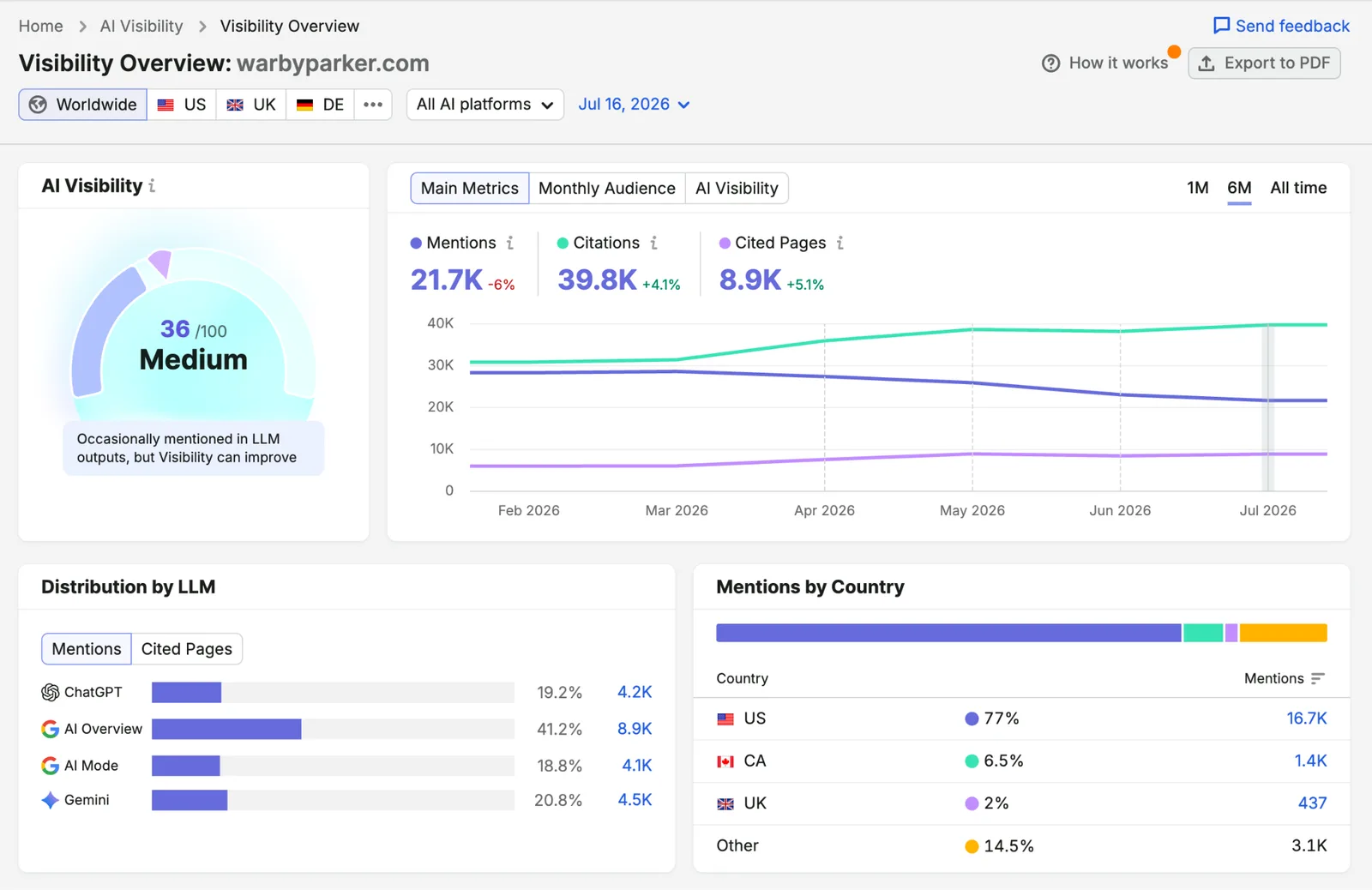
The short answerSEO (search engine optimization) is about ranking your pages in a list of links for a keyword. GEO (generative engine optimization) is about being named and cited inside an AI-written answer for a prompt. AEO (answer engine optimization) is another name vendors use for the same work as GEO. The goal, being found by buyers, does not change; the unit you measure does. In SEO it is a position for a keyword. In GEO it is how often, how well and with which sources an answer mentions you.
What is the difference between GEO and SEO?
Picture one buyer and one question: "what is the best invoicing software for a small agency?"
Typed into a classic search engine, that returns ten blue links. SEO is the craft of being one of them, as high as possible. You can measure the result precisely: position 4 on Monday, position 3 on Friday.
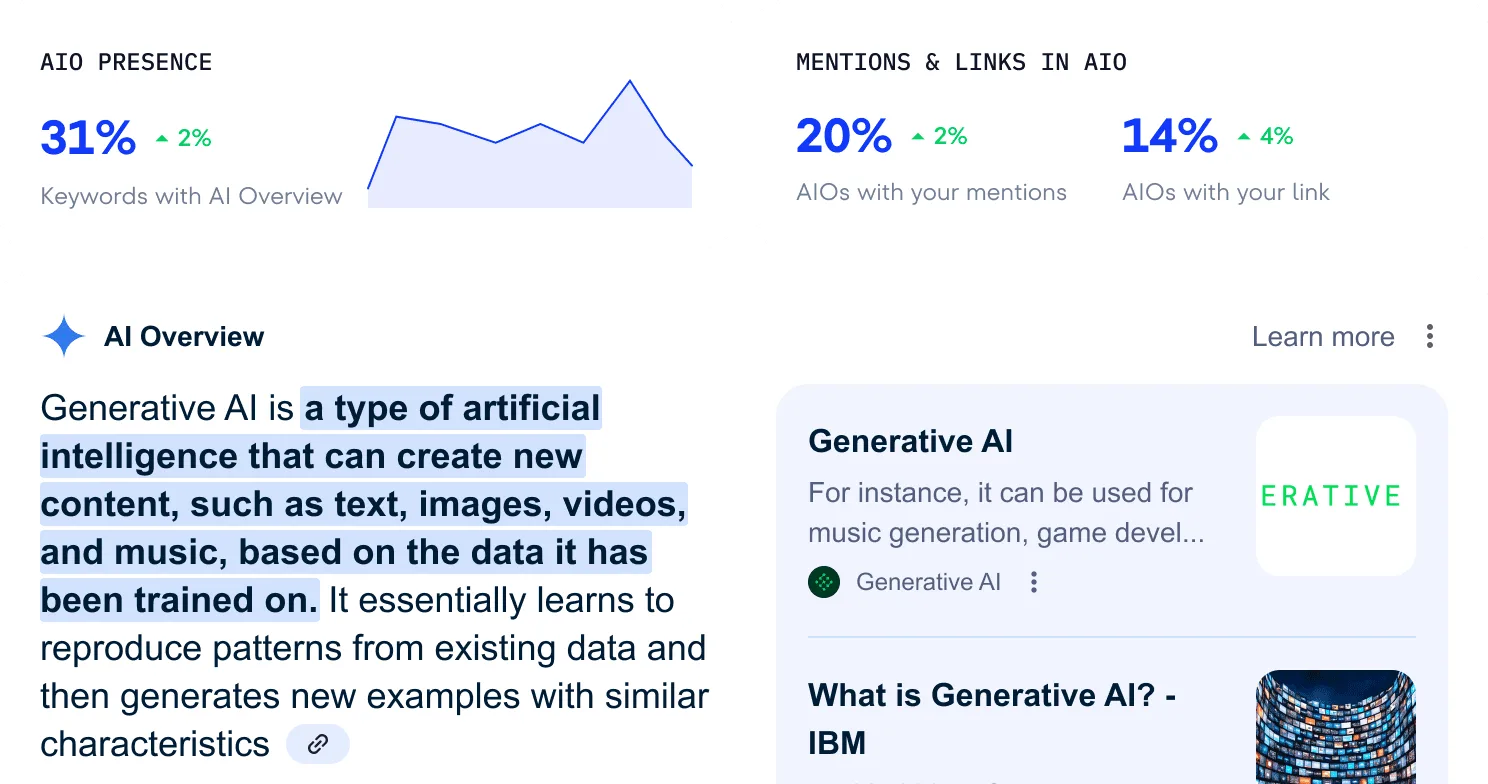
Typed into an AI assistant, the same question returns a few paragraphs that name three or four products, give a reason for each and sometimes link to sources. GEO is the craft of being one of the names, described the way you would describe yourself, with your own pages among the sources. There is no position 4. There is "named in 6 answers out of 10", "second in the list", "described as affordable", "cited from a review site, not from your site".
| SEO | GEO / AEO | |
|---|---|---|
| What you optimize for | A ranked list of links | A written answer |
| Unit you track | Keyword | Prompt |
| Main metric | Position, clicks | Mention rate, share of voice, citations, sentiment |
| Result for the same query | Largely stable from one search to the next | Varies from one run to the next |
| What gets credit | Your page | Your brand, and the sources the answer cites |
| Tools | Rank trackers, site audits, keyword research | AI visibility trackers, prompt research, citation analysis |
What about AEO vs SEO, and AEO vs GEO?
The vocabulary is messier than the work. Vendors in this market use at least four labels for overlapping products: AEO (answer engine optimization), GEO (generative engine optimization), AI visibility, and LLM SEO or LLM tracking. Profound calls itself an AEO platform. Evertune says GEO, Rankscale uses both. Semrush sells an "AI Visibility Toolkit". They all run prompts on AI engines and report what comes back.
If you want a working distinction: "answer engine" is the broader idea (any system that answers instead of listing, including featured snippets and voice assistants), and "generative engine" is the newer subset where a language model writes the answer. For buying a tool the difference is academic. Look at which engines it covers, not which acronym is on the home page. Our AEO tools ranking and LLM tracking tools ranking draw from the same 14 tools with different weights.
What stays the same?
More than the hype suggests. Three things carry straight over from SEO.
- Being crawlable. An engine cannot cite a page its crawler cannot read. Several tools here now audit exactly that: Semrush has an AI Search Health check in Site Audit, Peec AI audits which of 40+ AI bots your robots.txt allows, Scrunch audits how agents read your pages.
- Being the best source on a question. Pages that answer a specific question clearly are the ones that get quoted.
- Being talked about elsewhere. In SEO that meant links. In GEO it means the review sites, forums and publications an answer draws on. The citation reports in these tools are, in effect, a list of where to earn a mention.
Vendors also say the two are linked in the data. Nightwatch's pitch is that AI models frequently cite content that ranks well in Google, and that when a Google position drops, the AI citation rate often drops too; it shows both side by side for that reason. Treat that as one vendor's observation, but it matches the common-sense view: GEO is built on top of SEO, not instead of it.
What actually changes?
Answers are not stable. Ask the same question twice and the wording, the brands and the order can change. That is why tools talk about sampling. Evertune says its Pro plan samples each prompt 100 times per model to bring the margin of error to about 2 points. Otterly says single AI answers are noisy and recommends 50 to 100 prompts per topic so the swings average out.
You track prompts, not keywords. A keyword is two or three words. A prompt is a sentence with context: who is asking, for what, with which constraint. Some tools bridge the gap by generating prompts from your keyword list (LLMrefs, Otterly, Peec AI).
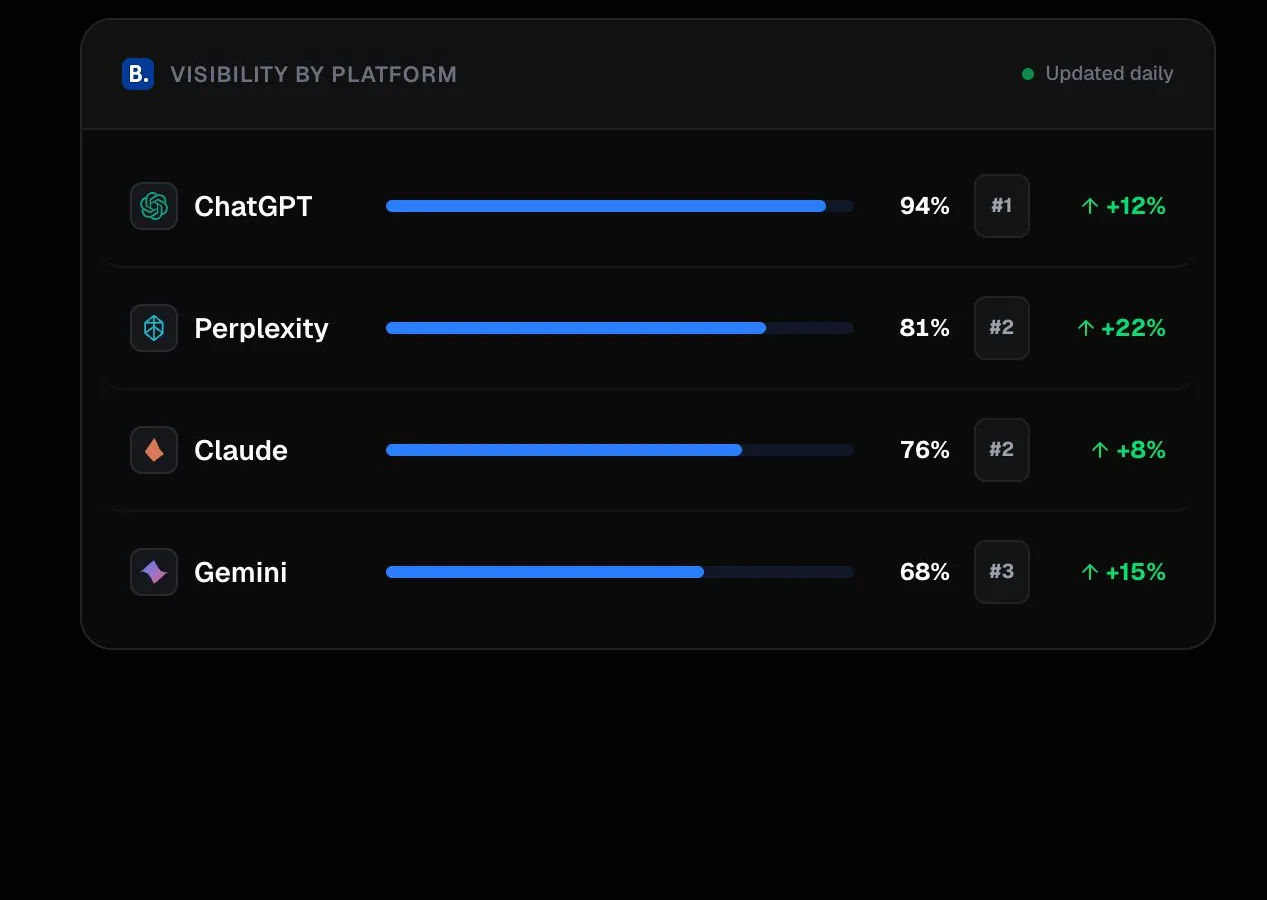
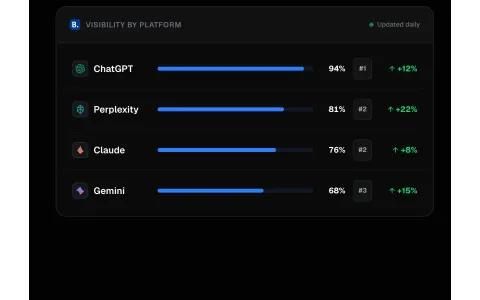
There are several engines, and they disagree. ChatGPT, Perplexity, Gemini, Claude, Copilot and Google's AI Overviews and AI Mode do not give the same answer. A brand can be strong in one and absent from another, which is why engine coverage is the first thing we score.
The source matters as much as the mention. An answer that recommends you while citing a competitor's comparison page is fragile. The useful reports show which domains and URLs fed the answer.
What should you measure in GEO?
Across the tools we compared, the same handful of metrics comes back under slightly different names.
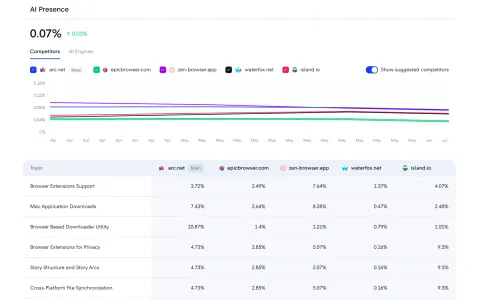
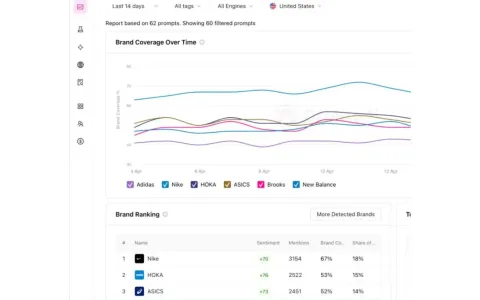
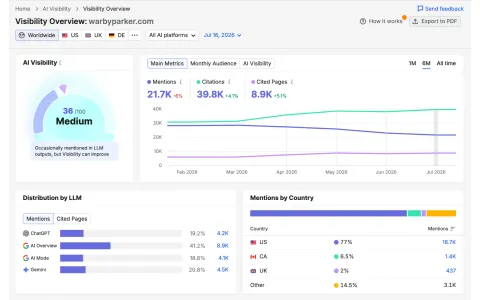
- Visibility or mention rate: in what share of answers your brand appears.
- Share of voice: your mentions against those of the competitors you track.
- Position: where you come in a list-style answer.
- Sentiment: whether the description is favorable, and which themes it attaches to you.
- Citations: which domains and pages the answer links to, and whether yours are among them.
- AI referrals and bot visits: visits arriving from assistants, and which AI crawlers read which pages.
Start with the first two and citations. They tell you whether you exist in the answers, against whom, and thanks to which sources. Sentiment and position matter once you are present.
Do you need a GEO tool if you already have an SEO suite?
Look at what your suite already includes. Semrush sells its AI Visibility Toolkit for $99 a month with 25 tracked prompts, or inside Semrush One from $199. SE Ranking includes 25 daily AI prompts in its SEO plans from $129 and sells a standalone tracker, SE Visible, from $89 for 75. Nightwatch includes 50 AI prompts in every rank tracker plan.
Those bundles are a reasonable first step. They fall short on two things: prompt volume and engines. If you need more than a few dozen prompts, or Perplexity and Claude by name, a dedicated tracker costs less per prompt.
| Tool | Score | Entry price | Included | Engines on that plan |
|---|---|---|---|---|
| 9.5/10 | $99/mo (Pro), Nov 14 | 1,200 credits a month, up to 4,800 answers | 17+ engines | |
| 9.4/10 | $89/mo (SE Visible Basic), Nov 14 | 75 prompts tracked daily, about 11,250 answers a month | ChatGPT, Gemini, Google AI Mode, Google AI Overviews, Microsoft Copilot | |
| 9.2/10 | $29/mo (Lite), Nov 14 | 20 prompts on 3 engines (2,000 credits a month) | 3 of 7 engines | |
| 8.7/10 | €99/mo (Starter), Nov 14 | 50 AI prompts, 1,500 AI answers a month, plus 500 keywords | ChatGPT, Gemini, Perplexity, Google AI Mode, Google AI Overviews | |
| 7.8/10 | $99/mo (AI Visibility Toolkit), Nov 14 | 25 tracked prompts, updated daily | ChatGPT, Google AI Overviews, Google AI Mode |
Reviews: Semrush AI Visibility Toolkit · SE Ranking · Nightwatch · Rankscale · Otterly AI.
Where should a small team start?
- Write 20 to 50 prompts your buyers would really ask: category questions ("best X for Y"), comparison questions ("X vs Y") and problem questions.
- Run a free check to see whether you appear at all. HubSpot, SE Ranking and AthenaHQ have free options, listed in free AI visibility tools.
- Track for a month on a low-cost plan before judging. One week of AI answers is noise.
- Work the citations. Find the three sources that appear most and do not mention you, and fix that first.
- Keep doing SEO. The pages that earn citations are, most of the time, pages that would deserve to rank.
When you are ready to pick a tool, the main ranking compares all 14 on prices read on November 14, 2026.
Three tools to start with
Each one has a full review with the price, the plan limits and the catch.
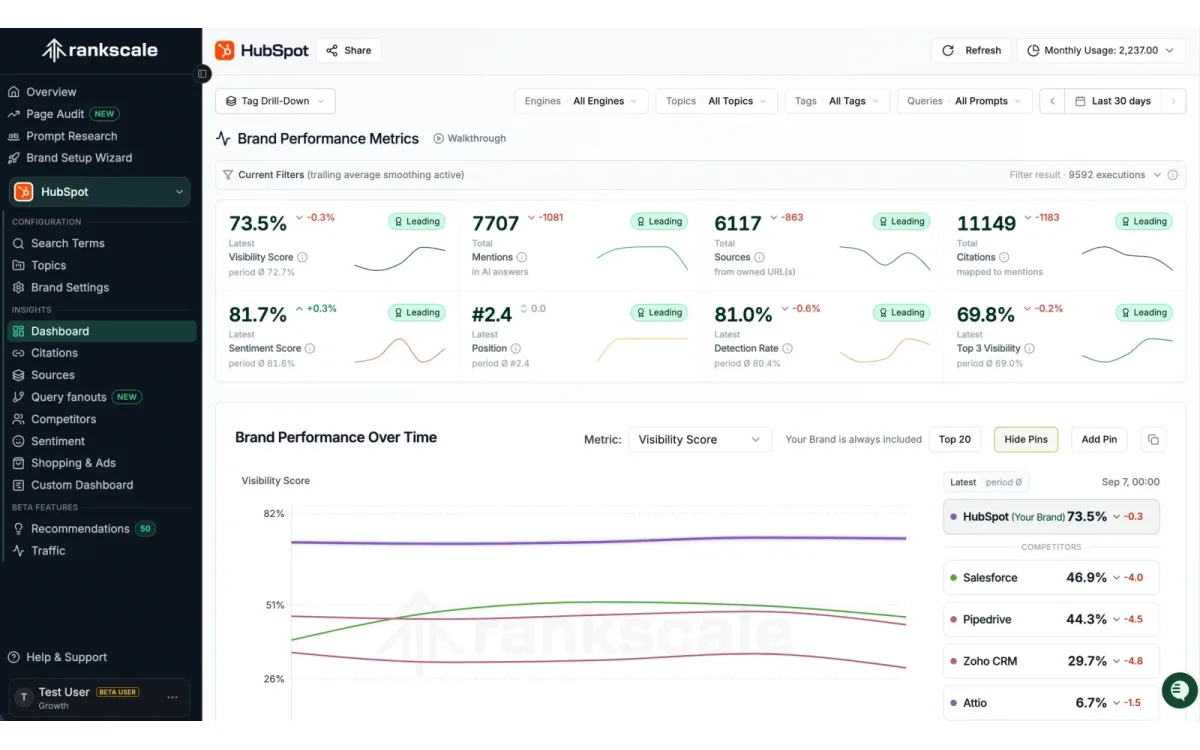
Rankscale review
Buyers who want every engine without a per-engine upsell. The catch: everything runs on credits and engines burn them at different rates, so the real prompt count depends on your mix.
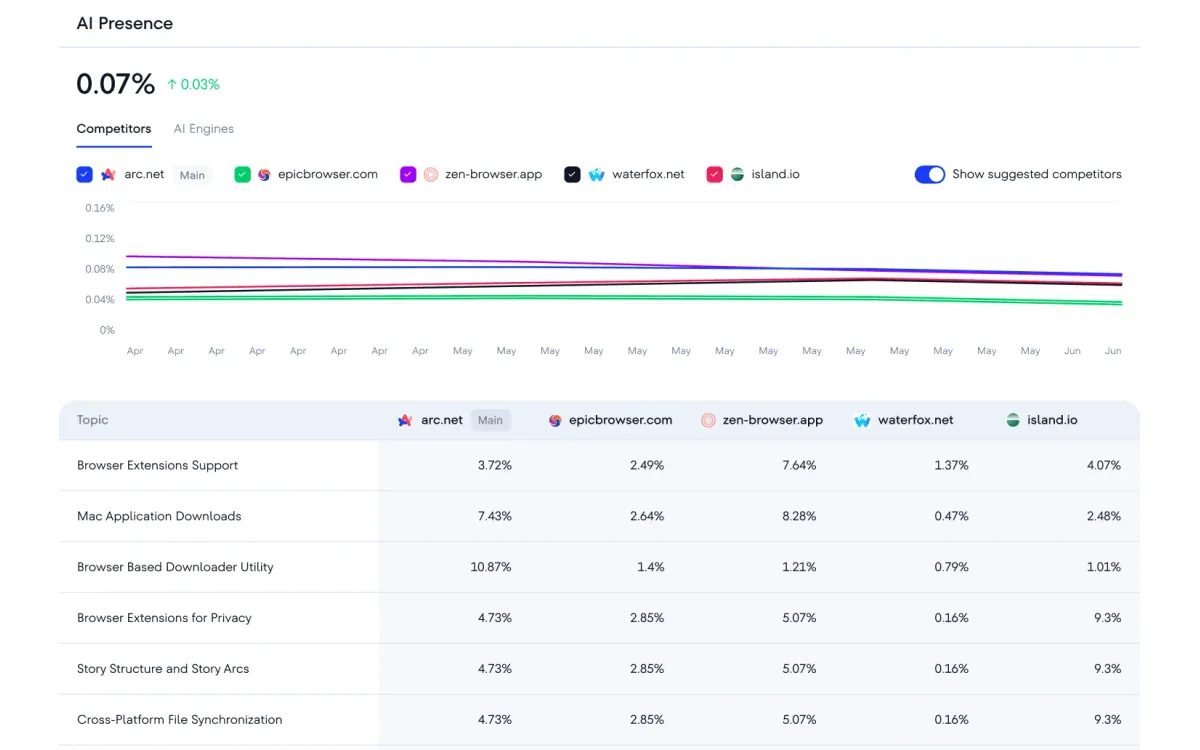
SE Ranking review
Getting the most tracked prompts per dollar on a daily schedule. The catch: two products, one name: the tracker inside SE Ranking has 25 prompts, the standalone SE Visible has the plans above. And no Perplexity.
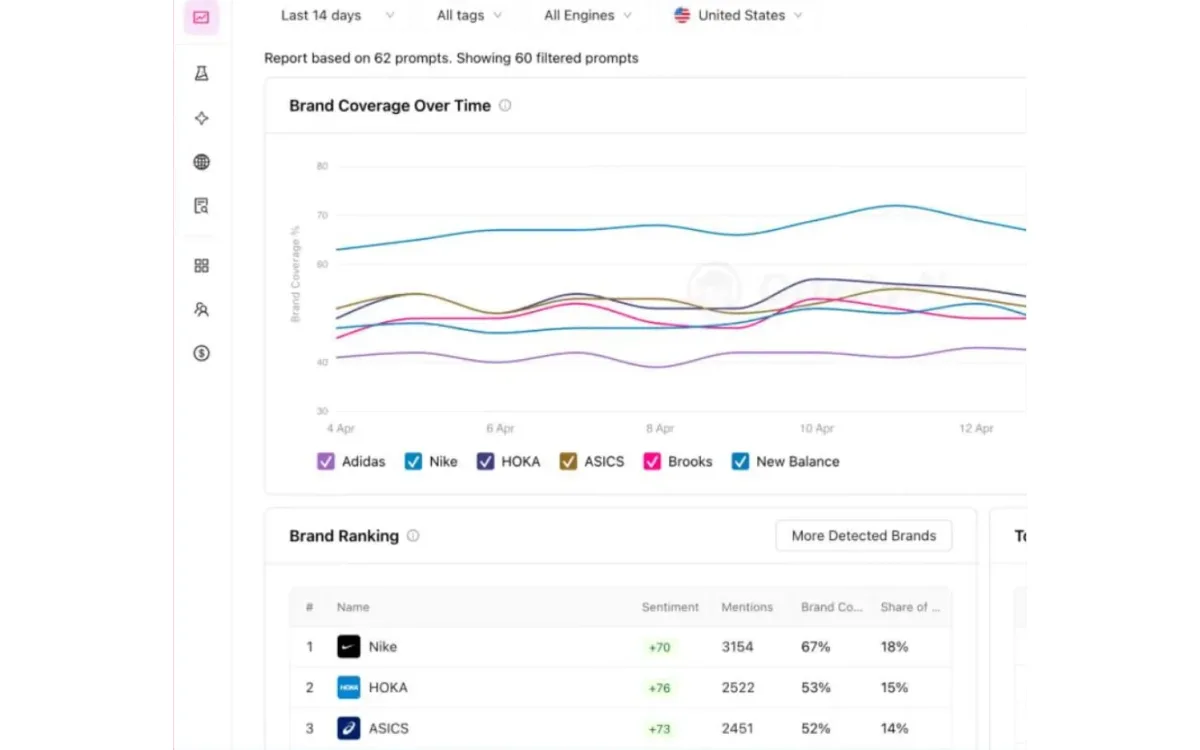
Otterly review
Solo marketers and small teams starting on a small budget. The catch: lite stops at 20 prompts and cannot buy extra credits. The next step up is $189.
Frequently asked questions
Is GEO replacing SEO?
No. GEO adds a new place to be visible, AI-written answers, on top of search results. The foundations are shared: crawlable pages, clear answers and mentions on trusted sites.
What does GEO stand for?
Generative engine optimization: the work of getting a brand named and cited in answers written by AI engines such as ChatGPT, Perplexity or Google's AI Overviews.
Is AEO the same as GEO?
For practical purposes, yes. AEO means answer engine optimization. Vendors use AEO, GEO and AI visibility for tools that do the same job.
How do I measure GEO?
With an AI visibility tool that runs a fixed set of prompts on a schedule and reports mention rate, share of voice, citations and sentiment. Prices start at $29/mo in our comparison.
Written by Nathan Price, editorial team. Prices, limits and engine lists were read on each vendor's official page on November 14, 2026; they change often, so check the vendor's pricing page before you buy. Some links may be affiliate links: it never changes our scores (affiliate disclosure, how we score).